


Fiasp Insulin: Fast-Acting Insulin Aspart Explained
Medically reviewed by Dr Sultan Linjawi, Endocrinologist & Diabetes Specialist — September 2026
Find the Right Program for You
Select the situation that best describes you




What is Fiasp fast acting insulin?
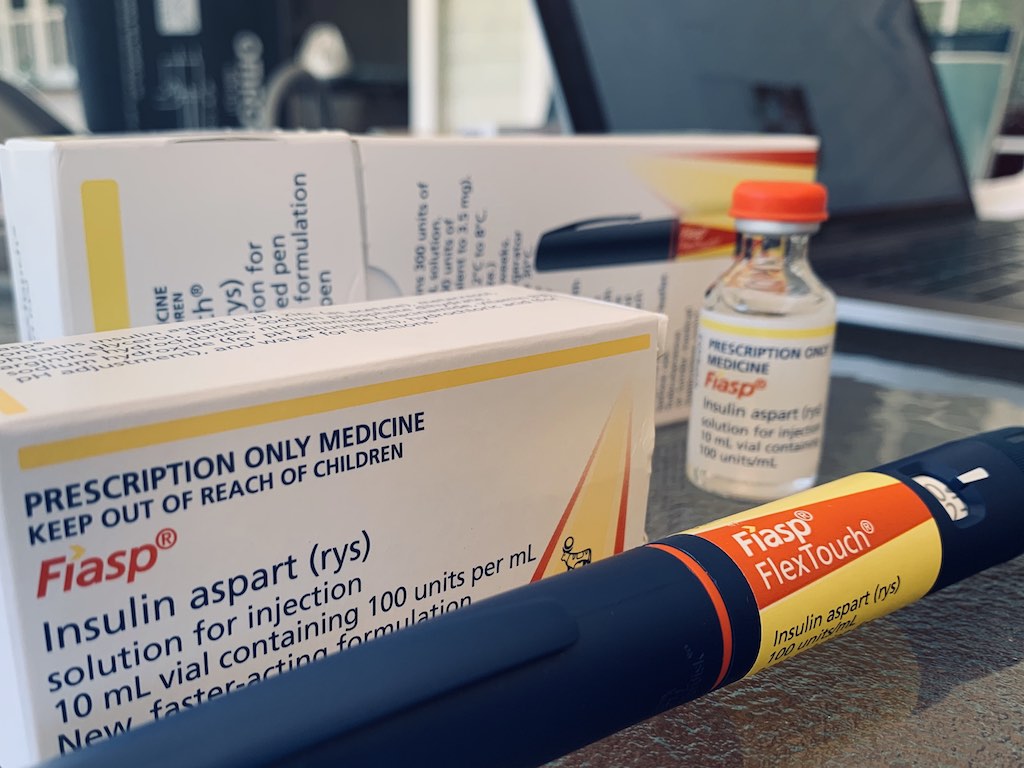
Fiasp fast acting insulin is a new rapid acting insulin designed to be used at mealtimes to improve the glycaemic control for people with type 1 diabetes and type 2 diabetes. It is manufactured by NovoNordisk and is based on the same insulin molecule as Novolog (NovoRapid), insulin aspart.
What is an insulin analogue?
Insulin is a small protein made up of multiple amino acids that are linked together. It is manufactured by beta cells in the islets of Langerhans in the pancreas. In humans insulin has a very short duration of action and is released continuously. When we eat foods that contain carbohydrates and sugars, a large spike of insulin is released.
By making small changes to the amino acids insulin manufacturers have been able to produce variations of human insulin called analogues that have specific characteristics that help with the delivery of insulin as a medicine. Modifications to insulins such as Humalog, Novolog/Novorapid, Apidra or Fiasp can for example when given before food speed up insulin delivery to help regulate blood sugars. It can also be more slowly released from under the skin so that insulin is absorbed continuously as a basal, long acting or background insulin.
What are the different types of insulin?
There are several types of insulin. The different types are classified according to how quickly the insulin begins to work and how long it remains active. These different types include; rapid acting, short acting, intermediate acting, long acting, very long acting.
Ultra Rapid acting insulin
- Fast Insulin Aspart (e.g. Fiasp)
Rapid acting insulin
- Insulin lispro (e.g. Humalog)
- Insulin aspart (e.g. NovoLog) – Fiasp is an example of a rapid acting insulin
- Insulin glulisine (e.g. Apidra)
Short acting insulin
- Insulin regular (e.g. Humulin R)
Intermediate acting insulin
- Insulin NPH (e.g. Humulin N)
- Insulin lispro protamine (mixed with rapid acting insulin lispro [e.g. Humalog Mix])
Long acting insulin
- Insulin glargine (e.g. Lantus (long acting basal insulin glargine), what it does, how it works, is it for you and how to get the best results using it
- Insulin detemir (e.g. Levemir; intermediate to long acting; may be needed twice daily)
Very long acting insulin
- Insulin degludec (e.g. Tresiba)
- Insulin glargine 300 units/mL (e.g. Toujeo)
Starting insulin — or adjusting doses — can feel overwhelming. Many people worry about getting it wrong, having low blood sugars, gaining weight, or needing more insulin over time.
To help address these concerns, I’ve created a short, practical guide that explains how insulin is meant to work, the common reasons it doesn’t work as expected, and how to use it safely and confidently in everyday life.
How is Fiasp delivered?
There are 3 ways to deliver Fiasp. They are:
- 10 mL multiple-dose vial
- 3 mL single-patient-use Fiasp FlexTouch pen
- 3 mL single-patient-use PenFill catridge for use in a PenFill cartridge delivery device like NovoPen Echo
For more information about the Fiasp FlexTouch pen and NovoPen Echo visit how to use Fiasp.
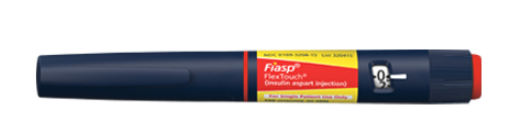
Fiasp FlexTouch pen
The Fiasp FlexTouch pen is a prefilled disposable insulin pen. The pen contains 300 units of U-100 Fiasp insulin aspart injection.
If you use an insulin pen as part of your diabetes management, it is important that you do not share your insulin pen with anyone else, even if you change needles. You may unknowingly give them a serious infection, or they may give you a serious infection.
Fiasp NovoPen Echo and PenFill cartridge
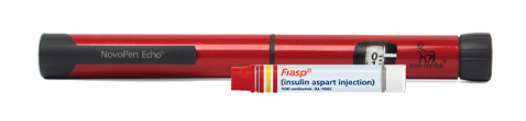
The NovoPen Echo is a refillable pen. The pen has a dose memory that saves information about how much insulin you last injected and the time passed since the last injection. Fiasp comes in a PenFill cartridge that can be refilled in the NovoPen Echo.
How should I take Fiasp?
Fiasp is contained in a disposable plastic pen which is based on the NovoNordisk FlexTouch pen.
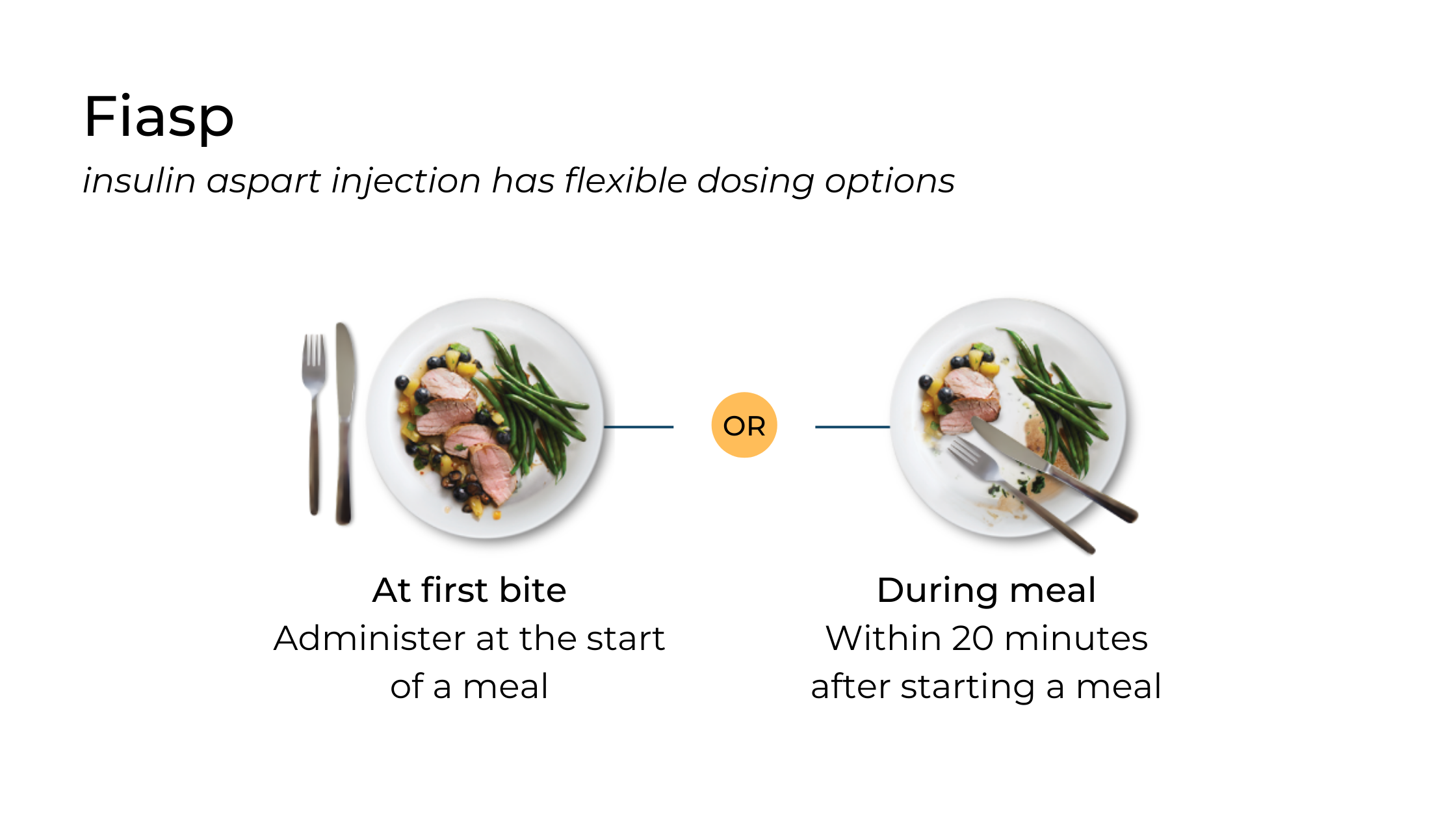
Fiasp should be injected at the start of a meal or within 20 minutes after starting a meal.
Do I have to have food when I have Fiasp?
Fiasp has flexible dosing options. Fiasp can be taken at mealtimes or within 20 minutes of starting a meal.
Diabetes and Diet Articles - What do I need to know?
Diet, and what you eat, plays an important role in diabetes management. Your diet is also classified as a modifiable risk factor in diabetes. Making changes to your diet can even play an important role in reducing the risk of developing diabetes related complications.
Follow the links below to learn more about diet in diabetes.
Diabetes diet: what should I eat if I have type 2 diabetes?

Making healthy food choices is important in diabetes treatment. In ‘Diabetes diet: what should I eat if I have type 2 diabetes,’ we have outlined 7 important changes you can make to you diet.
How to reduce carbs in your diet

There are so many helpful tips in this article! We cover some clever ways to reduce the carbohydrate content of the meals you are eating, without losing any flavour.
Should I follow a ‘low carb’ diet if I have diabetes?

There are so many helpful tips in this article! We cover some clever ways to reduce the carbohydrate content of the meals you are eating, without losing any flavour.
Diabetes diet. Why is it not more simple?

The link between diabetes and diet isn’t so simple. Food and nutrition do play a role when developing diabetes. But what does the evidence say?
The “Diabetic Diet”: When did it begin and how has it changed?

This article is great for those who like a little history! The article talks about how the treatment of diabetes has changed over the years, starting from 1500 BCE!
Yo-Yo Dieting – More serious than just regaining weight!

Yo-Yo dieting can be harmful to your health. A correlation has been found with yo-yo dieting and heart disease! You can read about the Framingham Heart Study in this article.
4 easy diet and exercise steps!

Looking for some really quick tips on how to make simple changes to your diet and exercise? We have them here and it involves the whole family!
How Can People Eat Junk And Not Gain Weight?

Remember: thin doesn’t necessarily equal healthy. And this was confirmed in a new report which showed that a poor diet is one of the highest contributing factors to chronic disease in Australia, second only to smoking!
Why Do We Eat When We Are Not Hungry?

Typically, people who are tuned in to their hunger cues are able to stop eating when they are satisfied and won’t eat again until they become hungry. This is referred to as intuitive eating. But even intuitive eaters will sometimes override their fullness signals for certain triggers.
When our food choice isn't just about food

Have you ever felt like your food preference or portion sizes were almost out of your control? It is possible that in some way they are. The difficult thing is eating can be driven by our mind instead of being a behaviour to reduce physical feelings of hunger and to stay alive and well.
How to treat a hypo without spinning your sugars into the twenties!

While the best way to manage a hypo is to prevent one happening in the first place, preparing for a hypo is the next best thing. As soon as your BGLs drop below 4mmol/L (72mg/dL), you need to act, as an untreated hypo can turn into a medical emergency very quickly.
What is the best area of the body to administer Fiasp?
The preferred site to administer the drug is the abdomen. Fiasp should only be administered subcutaneously into the upper arm, thigh, or your abdomen. When administering into the same body region, e.g. your abdomen, choose a different injection site each week.
It’s important to change (rotate) your injection site within the area you choose to inject, for example your thigh. It is important to change the site with each injection to reduce your risk of getting pits in your skin or thickened skin and skin with lumps.
Here are some key points to remember when administering Fiasp:
- Do not use the exact same spot for each insulin injection
- Do not inject your insulin where the skin has pits, is thickened, or has lumps – this can cause the insulin injection to not be effective
- Do not inject where the skin is tender, bruised, scaly or hard, or into scars or damaged skin
What is Fiasp action time?
Fiasp is a fast-acting insulin. Fiasp enters the bloodstream in approximately 2.5 minutes.
What are the side effects of Fiasp?
There are a number of potential side effects of Fiasp. Some of the side effects of Fiasp are common side effects from the use of insulin, and some side effects are more serious.
Common side effects of Fiasp
The common side effects of Fiasp are the same as side effects as other insulin products. And can include:
- low blood sugar or hypoglycaemia
- allergic reactions to the insulin or chemicals in the solution
- skin problems such as eczema, rash, itching, redness, and swelling of the skin
- reactions at the injection site such as itching, rash, skin thickening or pits at the injection site
- weight gain
What are the serious side effects of Fiasp ?
Serious side effects of Fiasp include:
- low blood sugar (hypoglycaemia)
- low potassium in your blood (hypokalaemia)
- allergic reactions (whole body reaction)
- heart failure – taking certain oral diabetes medications (thiazolidnediones; TZDs) in combination with Fiasp, can cause serious heart failure in some people
Looking for more diabetes videos?
Check out our latest diabetes videos for more great content.




How is Fiasp different from NovoRapid?
NovoRapid is also an insulin aspart injection designed to improve the glycaemic control for people with type 1 diabetes and type 2 diabetes.
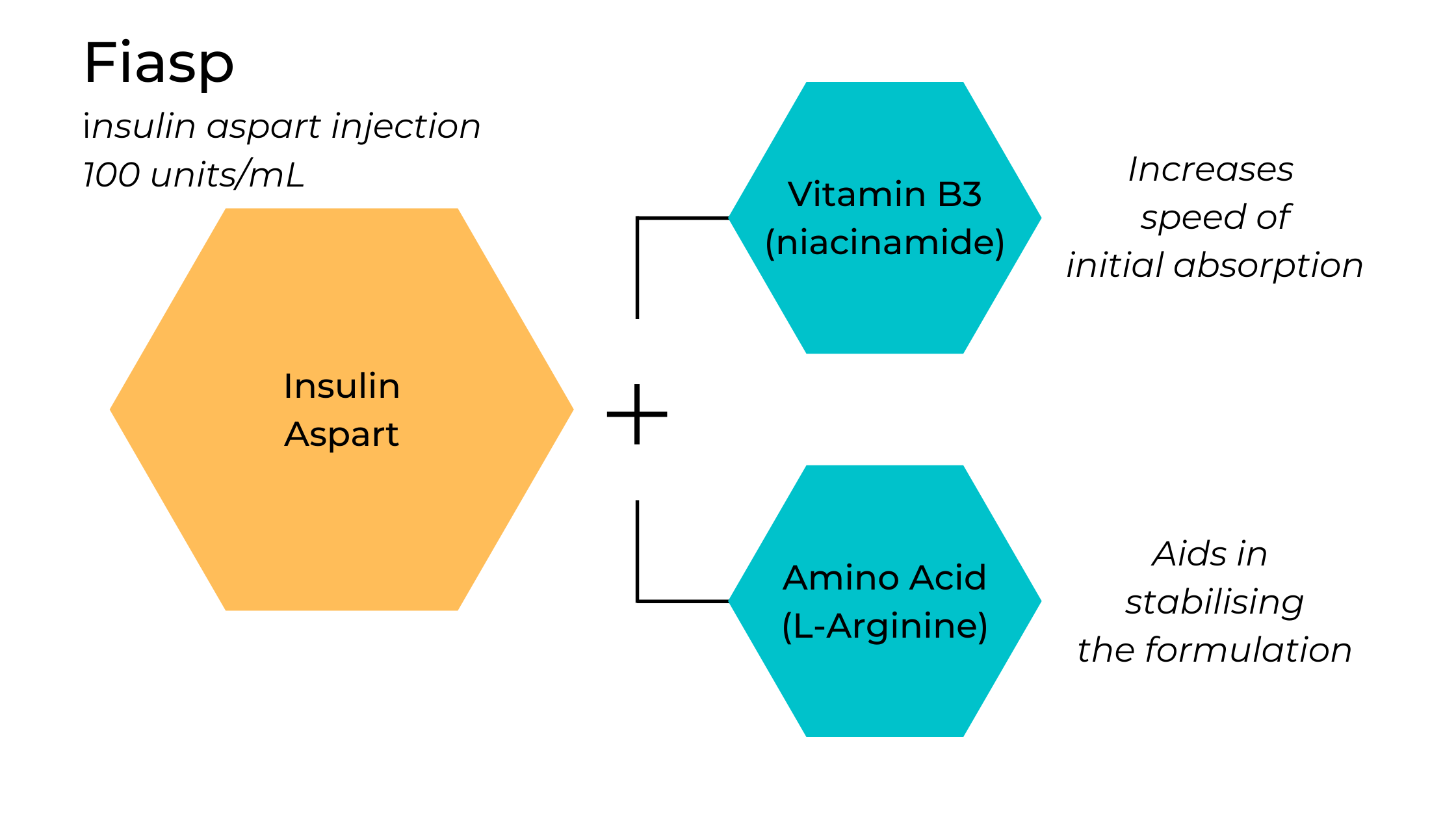
The active molecule in Fiasp is identical to NovoRapid. The difference between Fiasp and NovoRapid is the formulation. Fiasp has been formulated to increase the speed of the initial insulin absorption.
Fiasp is made up insulin aspart and Vitamin B3 (niacinamide) and an amino acid (L-Arginine).
Is Fiasp better than NovoRapid?
Some people may forget to take their insulin dose before starting a meal and may result in skipping a dose of insulin. If you have forgotten to take your insulin before you start eating,
Can Fiasp be used in an insulin pump?
Fiasp insulin aspart is also available in a 10-mL vial and has been approved for use in a pump. From our experience though it is worth pointing out that Fiasp works with Medtronic 640G and 670G. It does not work well with the Tandem TSlim pump as it can crystalise and block the narrow cannulas.
What is an insulin pump?
An insulin pump is a small, programmable, battery-operated device. An insulin delivers a steady, measured amount of insulin. Want to learn more about insulin pumps? Read How insulin pumps are thinking more like a pancreas… Introducing low glucose suspend for more information.
Does Fiasp insulin need to be refrigerated?
Yes. If you have excess Fiasp insulin injectable pens at home, they need to be stored in the fridge.
The best place to store your Fiasp insulin pens in the fridge, is on the top shelf of the fridge door. The butter compartment is usually the safest place. You shouldn’t store your Fiasp injectable pens in the coldest part of your fridge. If the Fiasp insulin injectable pen becomes too cold, then the Fiasp will degrade, making it less effective, leading to higher blood glucose levels.
Long term storage should be in a fridge between 2-8℃ (36-47℉). Once the pen is used it can be safely used for 56 days if maintained at a comfortable room temperature of 15-30℃ (59-86℉).
Read the insulin storage article for more information.
What do I do if I miss a dose of Fiasp?
If you miss a dose of Fiasp, you should continue to monitor your blood sugar levels to decide it an insulin dose is needed. You should continue with your regular dosing schedule at the next meal.
Is Fiasp safe to use during pregnancy?
Before taking Fiasp, you should talk to your doctor if you are pregnant or breastfeeding or plan to become pregnant or breastfeed. Whilst it has not been studies in pregnancy, the insulin molecule is exacly the same molecule as used in Novorapid which is approved in pregnancy. It is not yet known if Fiasp passes into the breast milk but we do know that Novorapid does not.
Who should not take Fiasp?
If your blood sugar is too low (low blood sugar is called hypoglycaemia), you should not take Fiasp.
If you are allergic to any of the ingredients of Fiasp, you should not use it as a medication to assist with your glycaemic control.
Looking for more diabetes videos?
Check out our latest diabetes videos for more content.

More Articles on Diabetes Treatments
For more information about different Diabetes Treatments, please follow the links below.
Oral Medications for Diabetes
- Starting on Metformin. What you need to know.
- Benefits of Metformin… A Wonder Drug?
- Metformin in Pregnancy. Is it safe?
- Metformin and diarrhoea.
- Vitamin B12 deficiency and diabetes.
- What is an SGLT2 inhibitor? It's a novel way to lower blood sugars, lose weight and maybe live longer.
- Rybelsus (Semaglutide) - A new oral medication to treat Type 2 Diabetes.
---
Insulin for Diabetes
- What is Ryzodeg insulin and how do I use it?
- Fiasp insulin. Fast acting insulin aspart.
- Managing Diabetes with Insulin: Is it necessary?
- Lantas. Solostar insulin glargine.
---
Injections for Diabetes
- What is Trulicity (Dulaglutide) and how does it work?
- Ozempic (Semaglutide) is a new treatment for type 2 diabetes.
- Xultophy 100/3.6 - Type 2 diabetes medication - Benefits, Side Effects and How to Use It.
- What is glucagon and how can a glucagon kit help someone with diabetes?
---


