


What Is Insulin Resistance? (Video Explanation)
Medically reviewed by Dr Sultan Linjawi, Endocrinologist & Diabetes Specialist — January 2026
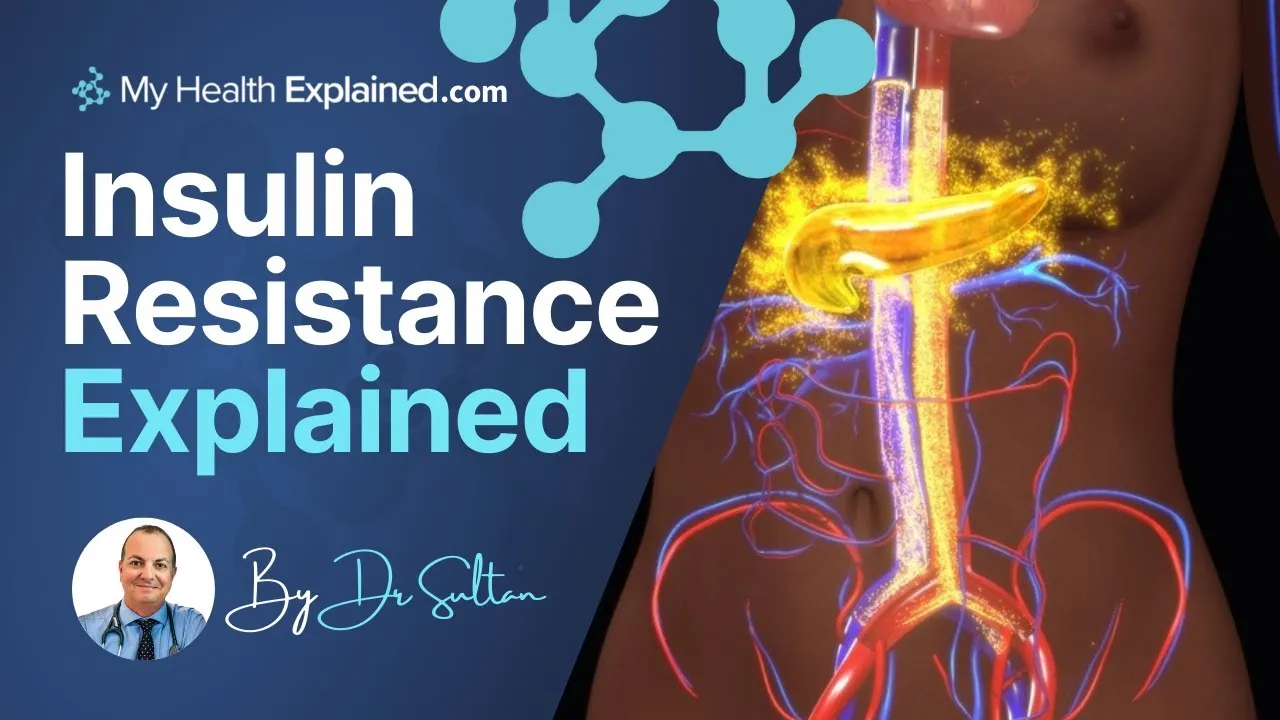
In this short video, Dr Sultan Linjawi explains insulin resistance in simple, practical terms — what it is, how it develops, and why it matters for prediabetes and type 2 diabetes.
Insulin resistance — explained simply
Insulin resistance means your muscle, liver, and fat cells stop responding to insulin as efficiently as they should. Your pancreas can often “compensate” for years by producing more insulin — until it can’t keep up, and blood glucose begins to rise.
Why it matters
Insulin resistance is one of the earliest drivers of prediabetes and type 2 diabetes, and it’s closely linked with belly fat (visceral fat), fatty liver, and metabolic syndrome. Understanding it helps explain why weight gain around the middle, rising sugars, fatigue, and increasing medication needs often appear together.
What helps most
- Modest, sustained weight loss (even 5–7% can be meaningful for insulin sensitivity)
- Regular movement (walking + resistance training is a powerful combination)
- Reducing refined carbs and increasing protein + fibre (so hunger is easier to manage)
- Better sleep (sleep restriction and sleep apnoea worsen insulin resistance)
- Stress reduction (chronic stress hormones push glucose up and drive cravings)
Start where you are
If you’re here for a specific question, use this quick guide:
- If you want the full explanation first → What Is Insulin Resistance? A Simple Guide to How It Works and Why It Matters
- If you’re here for symptoms → Symptoms of Insulin Resistance: Early Warning Signs You Shouldn’t Ignore
- If you’re here for testing → How to Test for Insulin Resistance: The Complete Evidence-Based Guide
- If you’re here for weight & belly fat → Insulin Resistance & Weight Gain: Why Belly Fat Matters (Visceral Fat Explained)
- If you’re here for women / PCOS / menopause / pregnancy → Insulin Resistance in Women: PCOS, Menopause and Pregnancy Explained
- If you’re here for causes → What Causes Insulin Resistance? Understanding Why It Develops
- If you’re here for health risks → Health Risks of Insulin Resistance: From Fatty Liver to Heart Disease
- If you’re here for what to do next → How to Reduce Insulin Resistance and Increase Insulin Sensitivity
- If you’re here for diet → Best Diet for Insulin Resistance: What to Eat to Improve Insulin Sensitivity
Prefer to watch first? The video above covers the core “lock and key” concept, then you can dive into whichever section fits your situation.


