


Lantus vs Toujeo: What’s the Difference? A Complete Guide to Insulin Glargine U100 vs U300
Medically reviewed by Dr Sultan Linjawi, Endocrinologist & Diabetes Specialist — May 2026
Lantus and Toujeo are both long-acting insulin glargine. They share the same molecule, but differ in concentration and how evenly the insulin is absorbed under the skin. These differences have important effects on duration, stability, glucose control and hypoglycaemia risk.
Although they are often described as “once-daily” insulins, the truth is more nuanced. This comes down to a key pharmacology concept:
Half-life matters more than the leaflet suggests
In the regulatory trials, manufacturers aimed to show both insulins worked once daily — a major convenience advantage over older twice-daily insulins. But their half-lives tell a clearer story:
- Lantus: ~12 hours
- Toujeo: ~14–18 hours (longer, but highly variable)
A half-life of ~12 hours means Lantus concentrations naturally fall by ~50% overnight. Many real-world patients therefore benefit from twice-daily dosing — especially at higher doses or when glucose patterns fluctuate. Toujeo lasts longer, but still may not provide a flat 24-hour profile in all people.
Why does Toujeo behave differently?
Both insulins are acidic inside the pen, but when injected their pH becomes neutral. They form crystals under the skin that slowly dissolve. With Toujeo (three times more concentrated), these crystals are smaller and more uniform, leading to a steadier breakdown and more consistent absorption.
I often use this analogy with patients:
“Imagine two tubs filled with ice. One has ice blocks all the same size (Toujeo). The other has a mix of big and small blocks (Lantus). In the first tub, everything melts evenly. In the second, the melt rate varies. That variation is exactly what we see with insulin absorption.”
For background on how basal insulin works, you may also want to read: Lantus SoloStar (insulin glargine), How is diabetes treated?
Starting insulin — or adjusting doses — can feel overwhelming. Many people worry about getting it wrong, having low blood sugars, gaining weight, or needing more insulin over time.
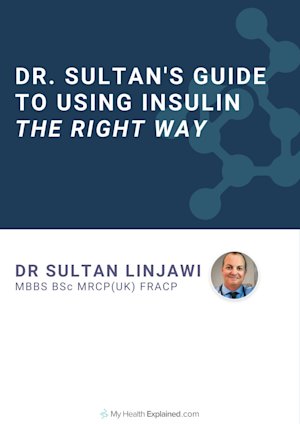
To help address these concerns, I’ve created a short, practical guide that explains how insulin is meant to work, the common reasons it doesn’t work as expected, and how to use it safely and confidently in everyday life.
What clinical trials show: fewer night-time hypos with Toujeo
The major registration trials comparing Toujeo and Lantus — known as the EDITION studies — consistently found that Toujeo produced fewer confirmed or severe nocturnal hypoglycaemia episodes, despite achieving similar glucose control.
Key results:
- ~20% reduction in confirmed or severe night-time hypoglycaemia with Toujeo.
- Smaller day-to-day swings in glucose due to a flatter absorption curve.
- Comparable HbA1c reductions between Lantus and Toujeo.
These findings came from multiple trials, including:
- EDITION 1, 2, 3 – Adults with type 1 and type 2 diabetes PubMed summary
- EDITION JP1 – Japanese population PubMed
- Meta-analysis of U300 vs U100 glargine PubMed
Across all studies, Toujeo’s more stable absorption pattern appears to be the main reason for its lower hypoglycaemia risk.
These findings align perfectly with the “ice block” analogy — Toujeo’s uniform crystals lead to fewer unexpected dips in insulin effect.
Once vs twice daily: what actually works?
Although both insulins carry a once-daily license, clinical practice often tells a different story:
- People requiring higher doses (>50 units) often absorb Lantus more reliably when it is split twice daily.
- Patients with significant glucose variability often stabilise when Lantus is given morning + evening.
- Toujeo’s longer duration helps, but it can still “fade” in some people, meaning twice-daily Toujeo is occasionally beneficial.
For people using rapid-acting mealtime insulin, see: Type 1 diabetes treatment and Type 2 diabetes treatment.
Why bedtime is still the most physiologic time
A night-time dose aligns the insulin peak with the dawn phenomenon and gives more predictable fasting readings. Morning dosing may wear off before the next morning, leading to dose escalation — which then increases the risk of late-afternoon and evening hypos.
So which is better — Lantus or Toujeo?
Clinically, both Lantus and Toujeo use the same insulin molecule and can achieve excellent glucose control. But Toujeo’s more consistent absorption, longer action profile, and 20% lower rate of night-time hypos give it a practical safety advantage for many people.
I often explain it like this: modern cars all get you from A to B, but newer models have improved safety features. You can drive without them, but when a better and safer version exists, many people prefer to benefit from the improvements. Toujeo’s flatter profile is one of those safety features.
That said, the best insulin is the one that keeps your glucose stable and fits your routine. Some people do extremely well on Lantus. Others get smoother overnight control and fewer hypos on Toujeo. Individual response matters.
You can read more about how basal insulin works in Lantus SoloStar (insulin glargine) and How is diabetes treated?.
Useful links and further reading
- FDA – Lantus Prescribing Information (PDF)
View FDA document - EMA – Toujeo EPAR
View EMA summary - EMA – Lantus EPAR
View EMA summary - EDITION 1–3 and meta-analysis (clinical trial data)
PubMed: EDITION 1–3 | PubMed: Meta-analysis - NIDDK – Taking Insulin (neutral government resource)
NIDDK - NHS UK – Insulin Medicines
NHS
These resources provide factual, non-commercial medical information and regulatory evidence. Always speak with your diabetes team before changing your insulin dose or timing.


